news|How to Choose the Perfect Dining Table for Your Space
How to Choose the Perfect Dining Table for Your Space
By Anima Domus News-June 13, 2026
A Practical Guide to Finding the Right Dining Table for Every Home
The dining table is the centerpiece of any dining room. It sets the scale of the space, defines the style of everything around it, and shapes how you and your guests experience the room every day. Knowing how to choose the perfect dining table for your space means thinking beyond looks — it means understanding size, shape, material, and how you actually live.
Start With How You Use the Space
Before considering table shape or material, think about daily life. Understanding how you will use your dining table — whether for family meals, dinner parties, or all three — is the most important factor in choosing the right dining table. A table that works beautifully for intimate gatherings may not serve a family through daily wear. A formal dining room table built for special occasions may feel oversized if you rarely entertain. Define your priorities first.
How to Measure Your Dining Area
Getting the dining table size right starts with the room. A good rule of thumb is to leave at least 35 inches (90 centimeters) between the table and the walls or any surrounding furniture to allow guests to move around freely. For comfortable chair movement and guest circulation, specifically, leave a minimum of 35 inches (90 cm) between your table edge and walls or other furniture. In tight spaces, every centimetre counts, so measure before you shop.
For comfortable legroom, allow 8 to 12 inches (20 to 30 cm) from the chair seat to the table underside. This prevents guests from feeling cramped over a long meal. Position dining chairs approximately 6 inches (15 cm) apart to give adequate elbow room while keeping the table seating convivial rather than crowded.
Dining Table Size: Seating Capacity as a Guide
Table dimensions should be driven by how many people you need to seat. Allow a minimum of 24 inches (60 cm) per person — this is the space needed for comfortable dining. For a table seating six comfortably, aim for approximately 60 to 94 inches (150 to 240 cm) in length.
For regular larger gatherings, an extendable table gives flexibility to scale up for special occasions without overwhelming the dining area on ordinary evenings. Extendable tables are the practical solution for anyone who entertains regularly — compact day-to-day, generous when the whole family gathers.
Choosing the Right Table Shape for Your Room
Table shape is not just an aesthetic decision — it determines how the table fits the room layout and how guests interact around it.
Rectangular Tables
Rectangular tables are the most versatile option for most spaces, accommodating larger gatherings efficiently and creating visual symmetry with architectural elements. A rectangular dining table suits open-plan spaces and larger rooms naturally. If you are unsure, a rectangular table is almost always the right table shape to start with.
Round Tables
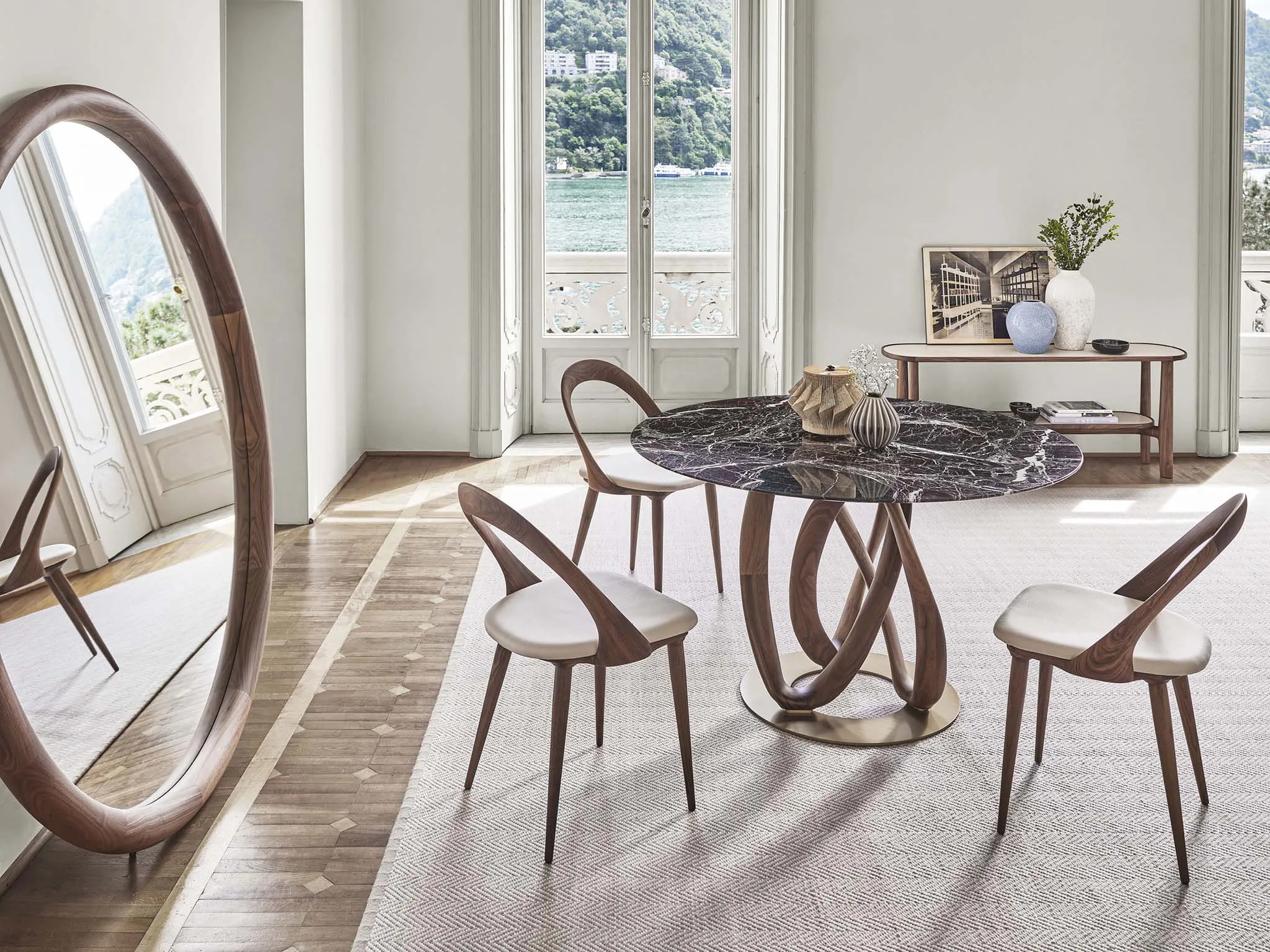
Round dining tables create intimate settings for family meals and are ideal for conversational flow, bringing guests closer together naturally. They work especially well in smaller rooms, and they eliminate the issue of anyone sitting at the head of the table — every seat is equal distance from the center. For breakfast nooks and intimate gatherings, round tables are the ideal dining table choice.
Square Tables
Square tables work well in square rooms, providing a symmetrical design that fosters connection and conversation among diners. They suit intimate dining experiences and smaller spaces, though they can also anchor larger rooms when the scale is right.
Oval Tables
The oval shape combines the benefits of rectangular and round designs — flowing curves that soften angular spaces, with extended seating capacity that a round table cannot match. An oval dining table is an elegant solution for those who want the social feel of a round table with enough surface space for larger groups.
Dining Table Materials: Choosing What Suits Your Life
The right table for your space is also the right material for your lifestyle.
Ceramic Tables
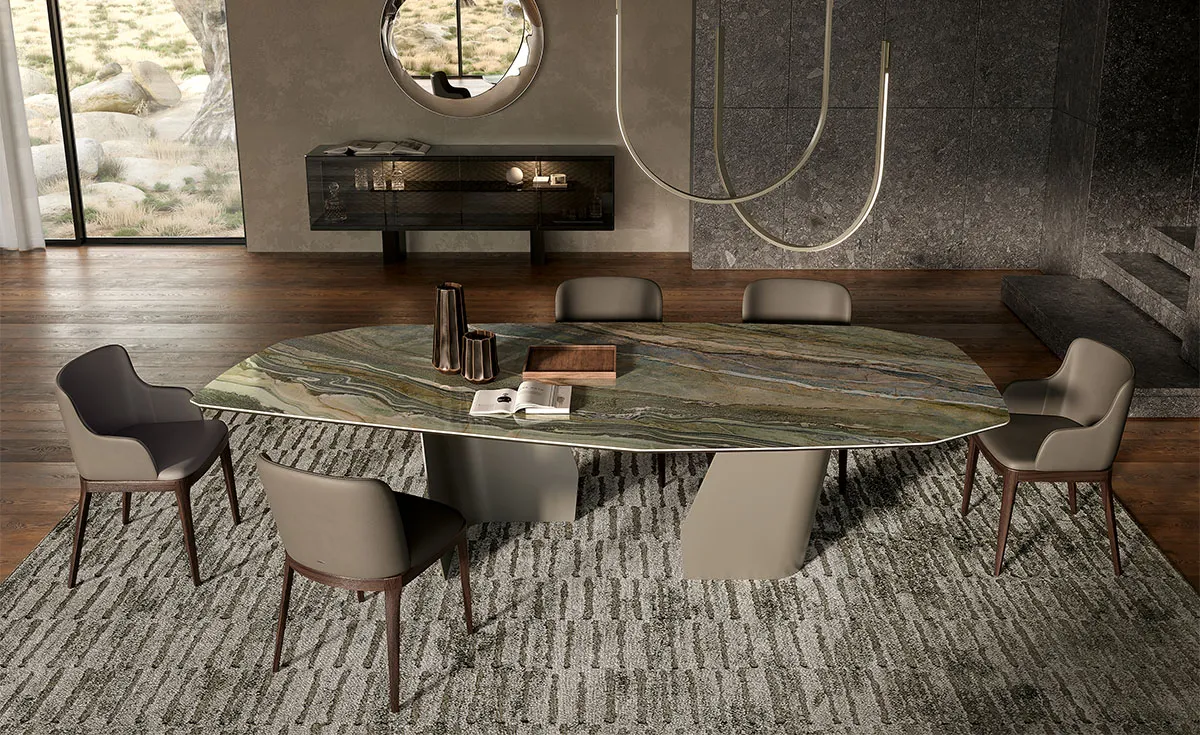
Ceramic tables are a durable material — low-maintenance and easy to clean — making them a great option for families with kids or those who entertain often. Families should prioritize dining tables that can withstand daily wear from meals and activities, and ceramic and glass are the materials best suited to that demand. The surface effects available in Italian dining room furniture today rival marble in visual impact, with a fraction of the upkeep.
Glass Tables
Glass dining tables are among the most popular choices for their ease of maintenance and visual lightness. A glass surface is simple to clean — resistant to stains and easy to wipe down — making it an ideal option for everyday use and family dining. Glass tables also create a sense of space, reflecting light and preventing the table from visually dominating the room. Tempered glass is the standard for safety and durability, and it pairs beautifully with a range of base materials, from polished metal to solid wood.
Marble Tables
Marble tables exude luxury and elegance. With unmatched visual presence, marble brings refinement to any dining area. The care requirement is real — marble needs sealing to protect against scratches and stains — but for a formal dining room where the table is a focal point, the investment is justified. Marble is a hallmark of Italian furniture design for good reason.
Solid Wood Tables
Solid wood tables offer warmth, character, and unique grain patterns that age gracefully over time. Walnut or natural oak in particular has become a defining material of the contemporary dining room — versatile enough to suit both classic and modern interiors. The consideration: unsealed wood can absorb stains easily, requiring regular polishing or sealing. For those who value natural warmth and are willing to care for it, a solid wood table is among the most rewarding choices in dining room furniture.
Table Height and Dining Chairs
Table height determines the comfort of the entire dining experience. Standard dining tables sit at around 30 inches (75 cm), which pairs correctly with dining chairs at a seat height of approximately 18 inches (45 cm). Always confirm table height alongside chair selection — the two must work together. Bench seating is an increasingly popular alternative to individual dining chairs, particularly along one side of a rectangular table, offering more space and a relaxed, generous feel.
Matching the Table to Other Furniture
The perfect dining table does not exist in isolation. It needs to speak to the dining chairs, sideboard, and other furniture in the room. Visual balance across the dining area — consistency of material tone, scale, and design language — is what makes a dining room feel considered rather than assembled. If the table is a warm walnut, the surrounding furniture should share that warmth. If ceramic and steel, the dining room furniture should echo that precision.
Find Your Perfect Dining Table at Anima Domus
Choosing a dining table is one of the most consequential decisions in furnishing a home. At Anima Domus, our Miami, Aventura, and Boca Raton showrooms carry an exceptional range of Italian dining tables — from Porada's solid wood mastery and Cattelan Italia's ceramic and glass statements to the extendable designs of Ozzio and the architectural forms of Desalto. Our design team can help you find the perfect table for your space, your style, and your life.
Explore our full range of dining room furniture at Anima Domus.
Frequently Asked Questions
FREQUENTLY ASKED QUESTIONS
For a table that seats six comfortably, look for a minimum length of 72 inches (180 cm). This allows 24 inches (60 cm) of space per person, which is the standard for relaxed dining. A 79-inch (200 cm) table is more generous and works well if you regularly host guests.
Ceramic and glass are the top choices for families because both are highly resistant to stains and scratches and are very easy to clean. Ceramic is particularly durable and can handle daily use and heat very well.
The standard dining table height is 30 inches (75 cm). This works best with dining chairs that have a seat height of around 18 inches (45 cm), leaving roughly 12 inches (30 cm) of clearance for comfortable legroom. If you are choosing a counter-height or bar-height table, the dimensions differ, and you will need stools to match.
The right shape depends on your room and how you use the table. Rectangular tables work best in longer rooms and are ideal for larger gatherings, as they offer more surface area and seating flexibility. Round tables suit square rooms or smaller spaces and create a more conversational, inclusive atmosphere where every seat feels equally close to the center.
Leave at least 35 inches (90 cm) between the edge of the table and the nearest wall or piece of furniture. This gives guests enough space to pull out their chairs comfortably and move around the table without feeling crowded. In open-plan spaces, 47 inches (120 cm) is even more comfortable.