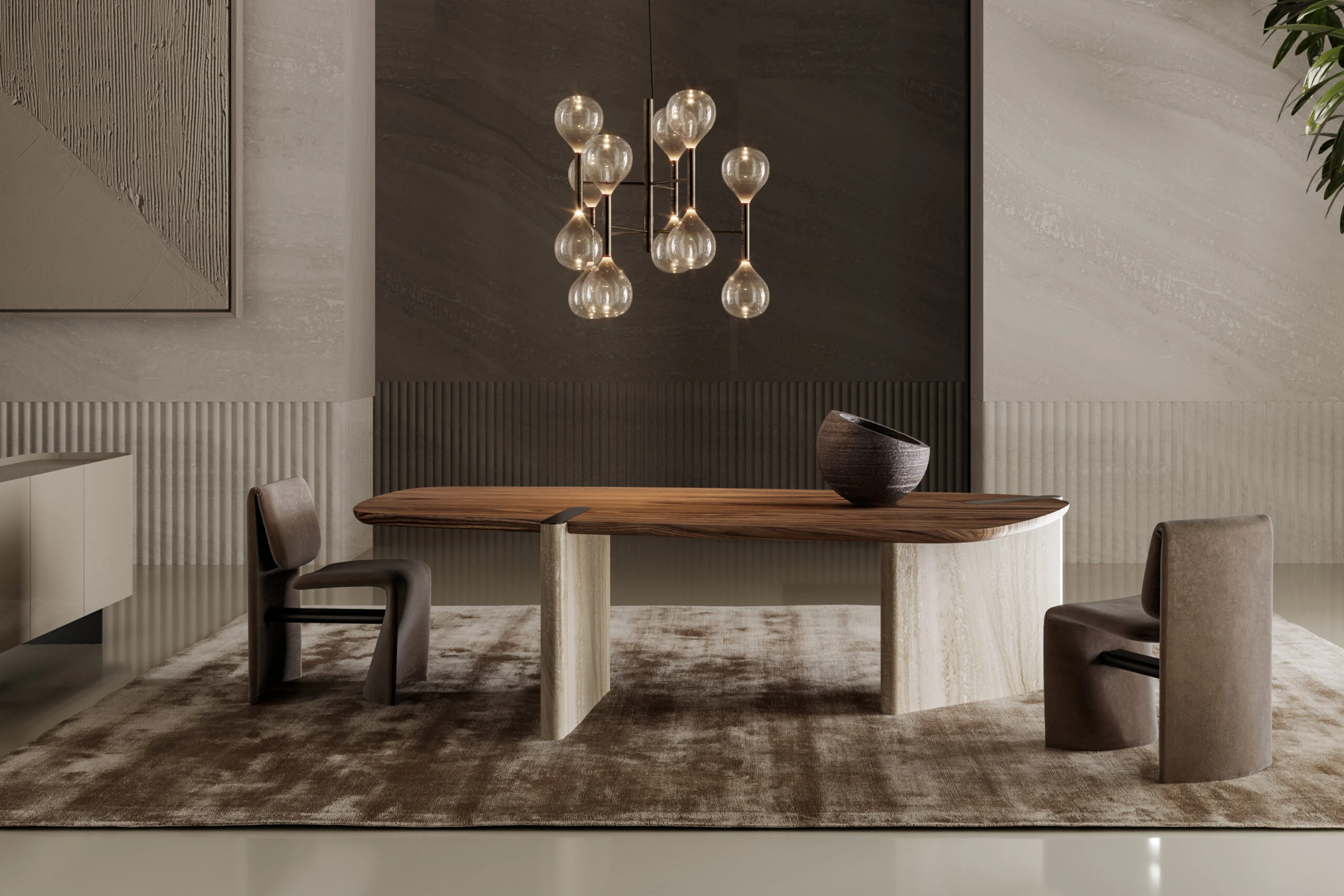
How to Create a Modern Italian Dining Room That Feels as Good as It Looks
The dining room is one of the most personal spaces in a home. It is where daily life slows down, where guests gather, and where the quality of what surrounds you is felt most directly. An Italian dining room does not happen by accident — it is the result of deliberate choices: the right dining table, the right chairs, the right light overhead. This guide covers the dining room design ideas that define the modern Italian dining room in 2026, and how to bring them to life in your home.
What Makes an Italian Dining Room Design Different

An Italian dining room should reflect a welcoming atmosphere and reveal personality through the choice of furniture, materials, and colors. This is the principle that separates Italian dining room design from decorating. Every element — the dining table, the chairs, the sideboard, the lighting — earns its place through quality, proportion, and the way it contributes to the room as a whole.
Italian dining room furniture is characterized by the use of high-quality materials: solid wood, marble, fine upholstery, and real Italian leather. These are not finishing touches. They are the foundation. A modern Italian dining room built on honest materials and precise craftsmanship will outlast any room assembled from trend-chasing pieces.
The Dining Table: Centerpiece of the Italian Dining Room
The dining table is the centerpiece of any Italian dining room design, influencing the style of every other furnishing in the space. In the modern Italian dining room, two approaches define current trends. The first is sculptural minimalism: a Porada dining table in Canaletto walnut, where the grain and warmth of solid wood do the work without ornamentation. The second is material drama: a Cattelan Italia table with a ceramic or marble top and a hand-brushed metal base, where precious materials create a dining room centerpiece with genuine visual authority.
Marble is a hallmark of Italian design, used in dining tables and flooring to convey opulence and refinement. For a modern luxury dining room, a marble-topped table anchors the space while keeping the palette restrained. For those who entertain, an extendable dining table allows the room to expand seamlessly for guests without compromising its clean lines on ordinary evenings.
Chairs: Where Comfort Meets Italian Dining Room Style

A dining table needs chairs that match its ambition. In a modern Italian dining room, upholstered chairs in real Italian leather or luxurious fabric — bouclé, tweed, crushed velvet — bring warmth and tactile richness to the space. These are current trends in Italian dining rooms that elevate seating beyond the functional into the genuinely pleasurable.
Contemporary style calls for clean architectural forms — slim profiles and precise proportions that echo the dining table rather than competing with it. A set of Bonaldo or Eforma dining chairs alongside a strong central table creates an Italian dining room where every piece feels resolved.
Sideboards, Display Cabinets, and Storage
A considered Italian dining room includes more than a table and chairs. Sideboards provide practical storage while anchoring the walls of the room. Display cabinets allow the dining area to hold objects — glassware, ceramics, art objects — that reveal personality and add visual depth.
In a modern Italian dining room, these pieces follow the same material logic as the table: warm wood tones, refined lacquers, or the quiet precision of a Sangiacomo or Lago wall system. The result is a dining room that feels complete — one that works as well for daily life as for entertaining.
Lighting: The Atmosphere of the Italian Dining Room
Lighting plays a crucial role in Italian dining room design. Crystal chandeliers remain a signature of the classic Italian dining room — generous, sculptural, capable of transforming a room by day and by night. In a modern Italian dining room, large pendant chandeliers in brass, blown glass, or architectural metal bring the same elegant atmosphere without the formality. Brands like Flos, Contardi, and Oluce produce dining room lighting that functions as a statement piece in its own right. Table lamps on a sideboard, combined with dimmable overhead lighting, create the layered ambiance that makes an Italian dining room feel alive at any hour.
Italian Dining Room Design Ideas by Style
Modern Italian Dining Room
Clean lines, neutral colors, warm materials. A dining table in walnut or ceramic paired with upholstered chairs in performance fabric. Minimal decoration, a statement pendant, and a sideboard with refined hardware. Timeless elegance without ornament.
Classic Style Italian Dining Room
Rich upholstery, marble surfaces, crystal chandeliers. Master artisans working with precious materials and traditional techniques. A dining room built for timeless beauty — designed to anchor the space for generations with sophistication.
Contemporary Italian Dining Room
A blend of different styles and new materials. Ceramic and glass alongside warm wood. Interior designers increasingly favor this layered approach for its flexibility and its ability to feel both luxurious and enduring. Classic style and modern Italian sensibility combined.
Your Dream Dining Room at Anima Domus
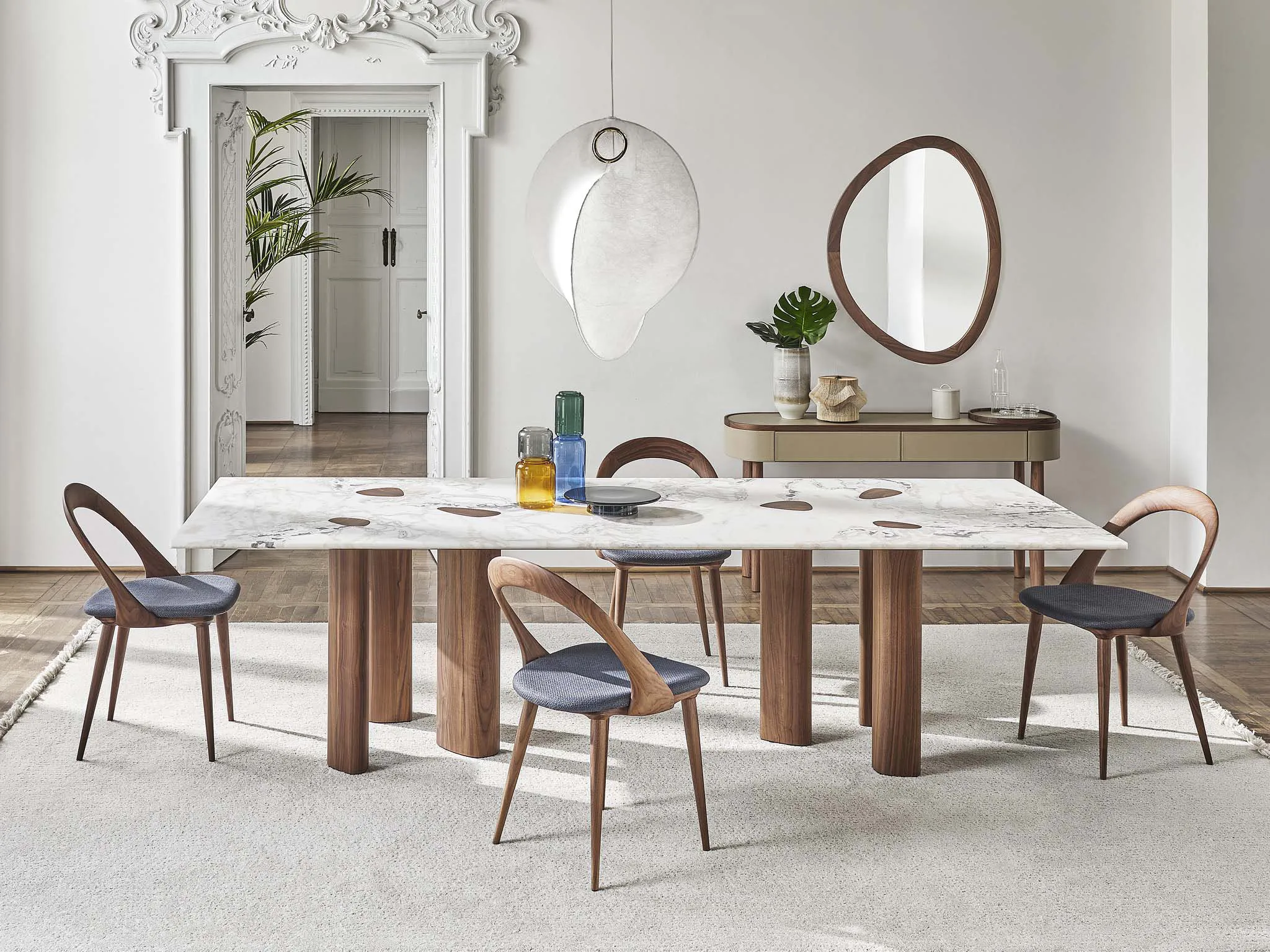
The modern Italian dining room is not a single look. It is a set of principles — quality materials, considered proportions, honest craftsmanship — applied to a dining space that reflects how you actually live. Whether you are drawn to the warmth of solid wood, the drama of marble and metal, or the quiet luxury of fine upholstery, Italian furniture offers a furnishing range that no other tradition can match.
At Anima Domus, our Miami, Aventura, and Boca Raton showrooms bring together the best of Italian dining room design — from Porada and Cattelan Italia to Saba, Lago, and beyond. Visit us to explore the collections and find the ideal choice for your home.
Explore our full range of Italian dining room furniture at Anima Domus.
FREQUENTLY ASKED QUESTIONS
Italian dining room furniture is distinguished by its exceptional craftsmanship, premium materials, and timeless design philosophy. Unlike mass-produced furniture, Italian pieces are crafted by skilled artisans using techniques passed down through generations. The result is furniture that combines beauty with durability, featuring refined proportions, quality upholstery, and finishes — from solid woods and marbles to lacquers and metals — that are built to last for decades.
As a general rule, allow at least 90 cm (36 inches) between the edge of the dining table and any wall or furniture piece to ensure comfortable movement. For seating, plan for approximately 60–70 cm (24–28 inches) of table width per person. A rectangular table works well in longer rooms, while a round or oval table suits square rooms and promotes conversation. At Anima Domus, our design consultants can help you find the perfect proportions for your specific dining space.
Yes, and many designers actively encourage it. Mixing brands like Porada, Frigerio, Gamma, Bonaldo, and Lago can create a more dynamic and personalized space. The key is to maintain a cohesive design language — whether through a consistent material palette, a shared style (such as modern or classic), or complementary proportions.
A pendant light or chandelier hung directly above the dining table is the foundation of great dining room lighting. It should be centered over the table and hang roughly 70–80 cm (28–32 inches) above the tabletop. For a classic Italian dining room, sculptural crystal or blown-glass chandeliers from brands like Oluce or Contardi add drama and warmth. In a modern or contemporary setting, a sleek architectural pendant in brass or matte metal creates a cleaner focal point. Layering with a sideboard lamp or wall sconces allows for flexible mood lighting throughout the evening.